It still feels like an honour representing Singapore to present what Singapore is all about. Because it is an honour to do so, together with my fellow delegates.
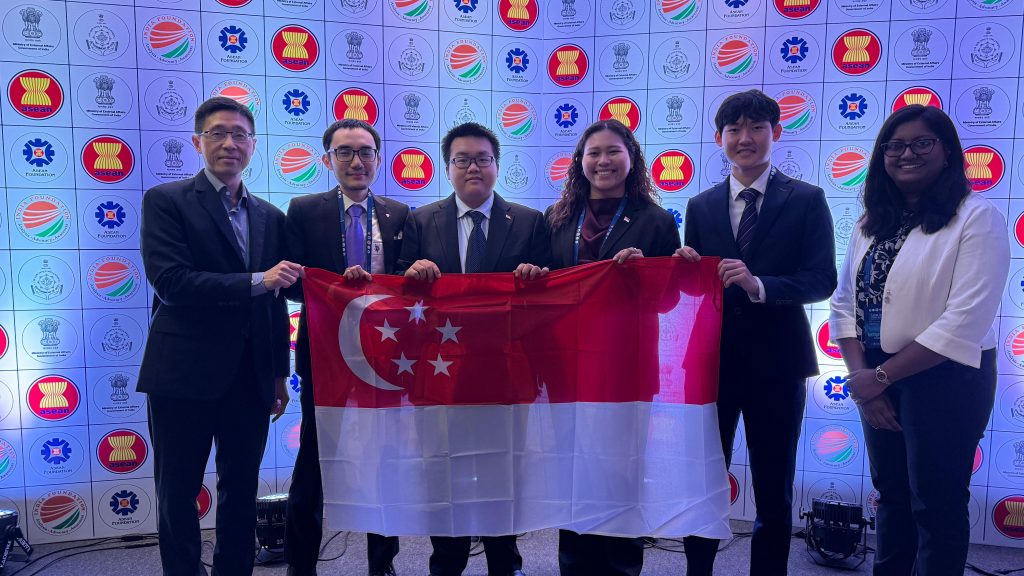
And considering this was my inaugural opportunity to represent Singapore in such a summit, what did I learn and encounter?
Several Singaporeans’ View of Singapore
Before heading to Goa, where the 5th ASEAN-India Youth Summit was held, we had to come up with a country presentation.
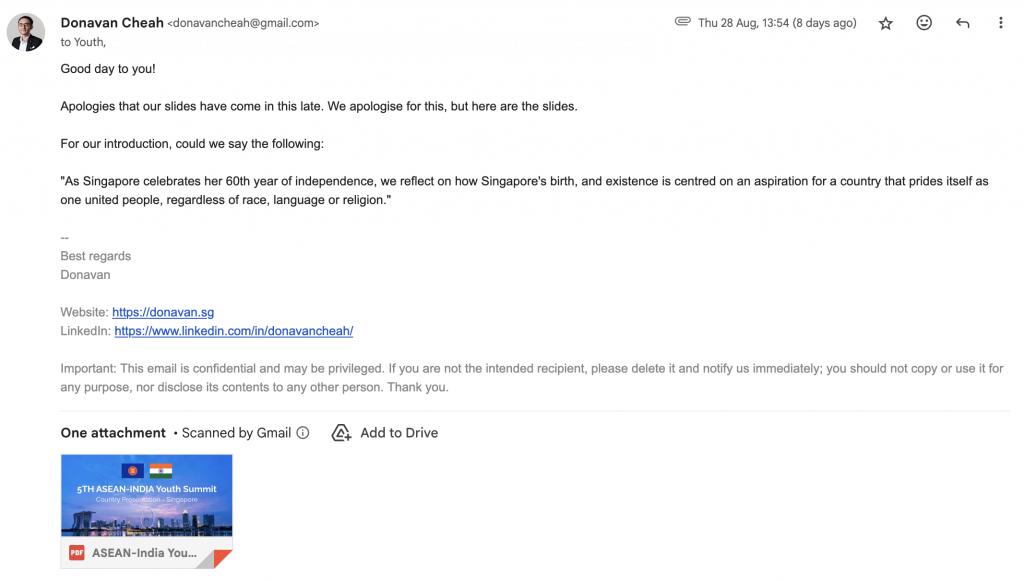
What You’d Expect: Five delegates judiciously working, asynchronously, and making sure the slide deck was fit for purpose before the trip.
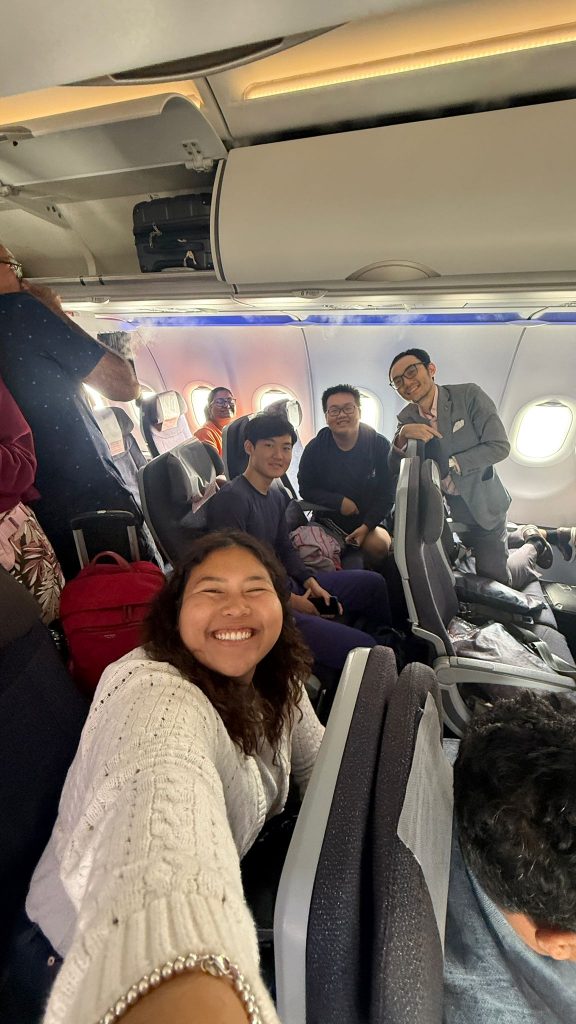
What Happened: Five delegates scaffolding the slides while on transit in Mumbai. Still sorting the slides and finalising them during Part I of Country Presentations.
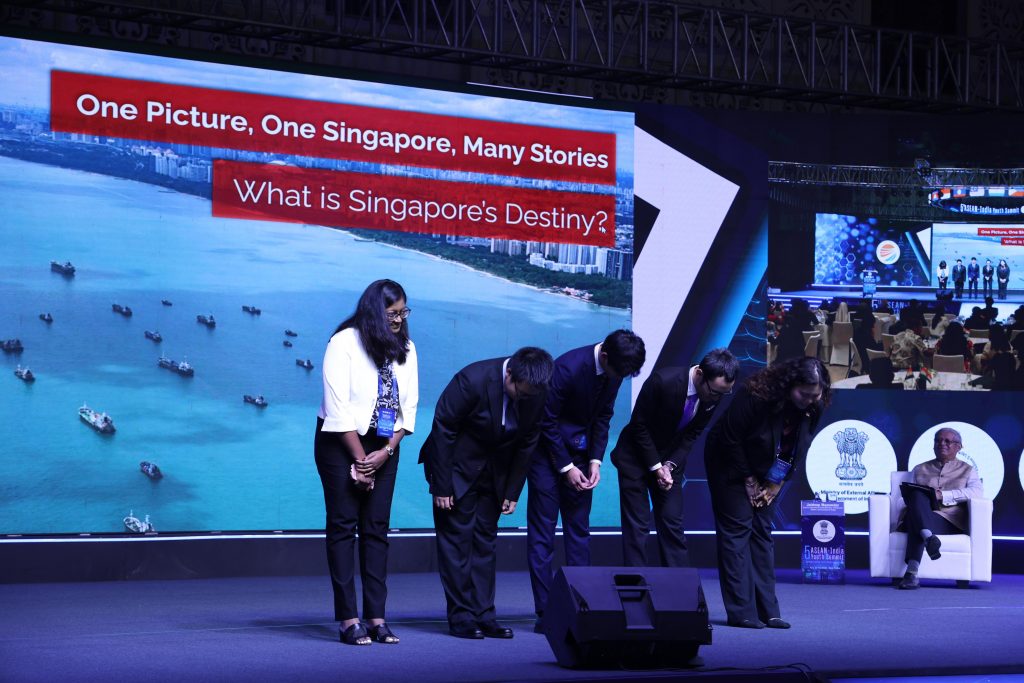
So what did five Singaporeans come up with, about Singapore?
We began with our youngest, Maximillian, who read the entire National Day recollections (with slides).
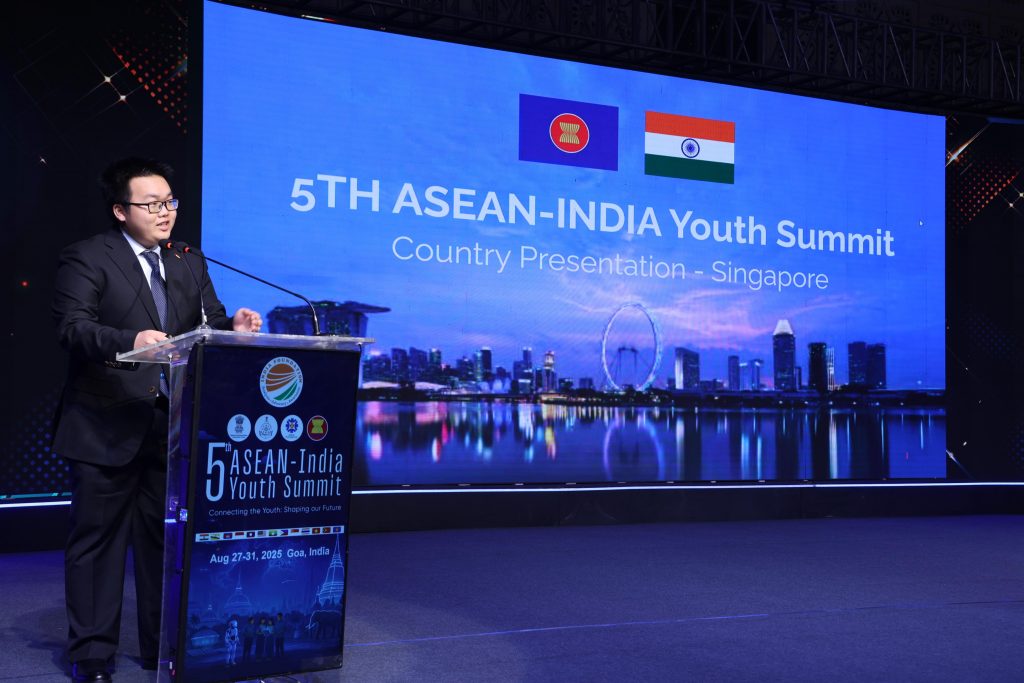
National Day Recollections (reproduced in its entirety):
‘RECOLLECTIONS’
NARRATOR:
There was a time, not long ago,
When other flags flew in Singapore
The British flag in colonial rule,
And the Japanese flag in war.
There was no freedom, no justice,
When our forefathers stepped ashore.
Life was a struggle, bitter and hard.
And families were hungry and poor.
They spoke a dozen different tongues,
Though their dreams were all the same.
But their hopes for a better life were lost
When war and invasion came.
RESPONSE:
They had no rights, they had no say,
And they longed to be free one day.
NARRATOR:
After the war, we called for change,
For the right to decide our fate.
Some of us wanted democracy;
Others, a Communist state.
Riots and killings in our streets,
Years of hate and fear.
People said we’d never survive
As independence drew near.
When self-rule came, we took a vote
And joined Malaysia, merged as one.
But even friends disagree sometime,
And more trouble had soon begun.
RESPONSE:
Our happiness was not to be
Until our country could be free
NARRATOR:
August nine, nineteen sixty five,
We were out of Malaysia…alone!
Against all odds we had to build
A nation of our own.
We’ve come this far, by ourselves,
One people from many lands.
Our forefathers paid the price for us;
Now the future is in our hands.
This is our home, where we belong,
And our flag flies high and free.
But let’s not take for granted
What we have will always be.
RESPONSE:
We pledge to keep our nation free
With justice and equality…
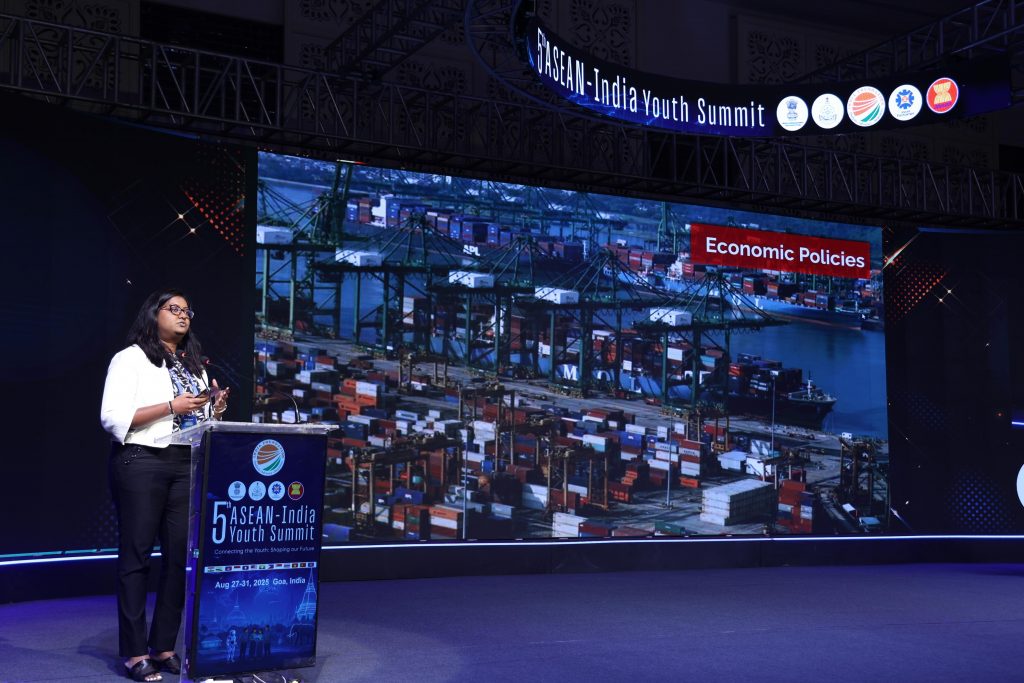
And then Keerthigar moved into economic policy: our lifeblood.
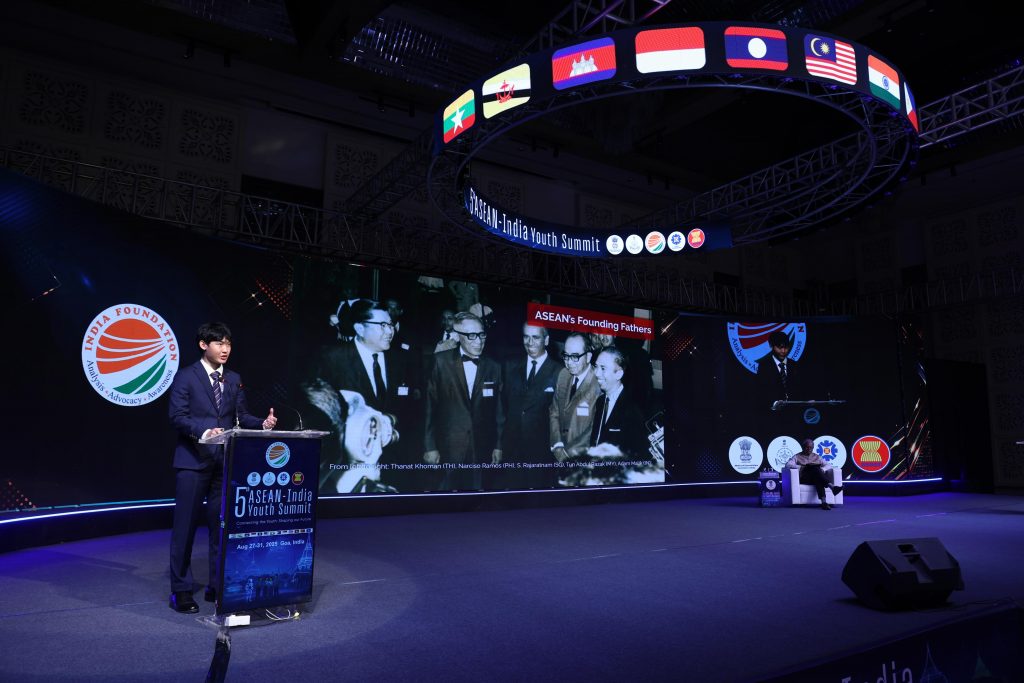
Given this was the ASEAN-India Summit, Cleveland’s introduction of why Singapore joined ASEAN as one of five founding members was especially apt.
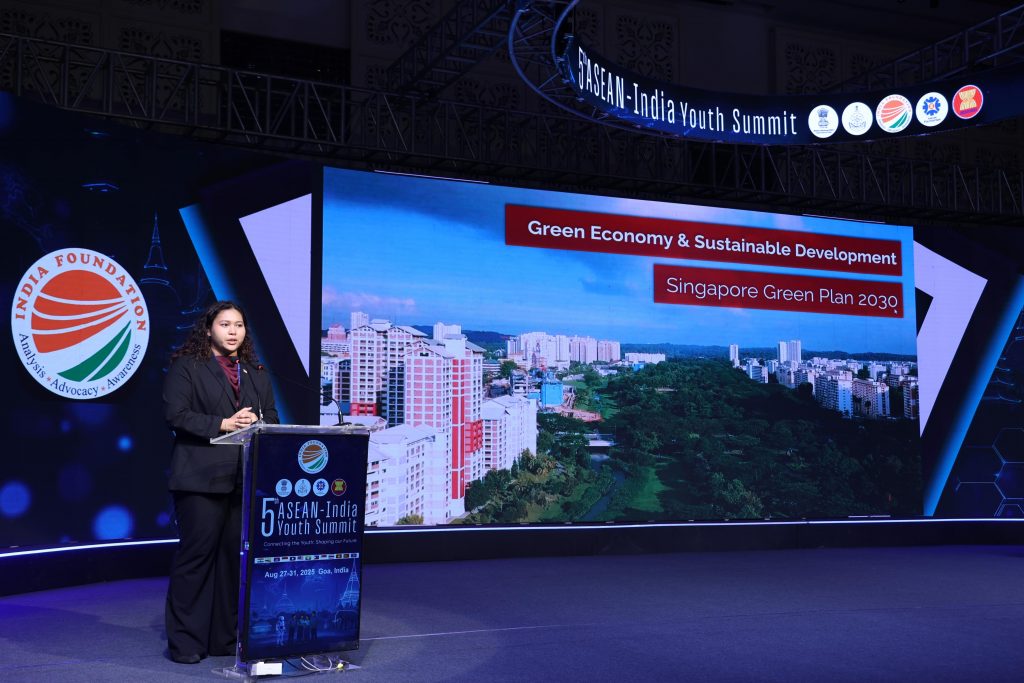
And then, given it was a youth summit, Alisja talk about issues youth care about.
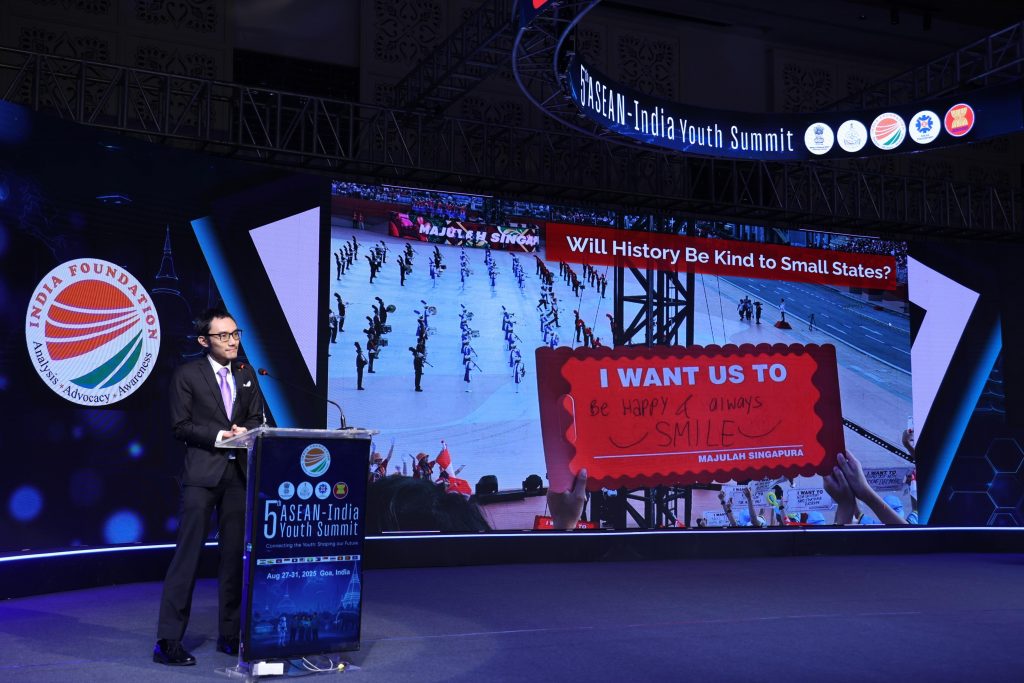
Lastly, I decided to round it up, perhaps with a question to the audience (and fellow small states): will history be kind to us? Can we defy the odds of history?
But I think what I remember most from our presentation was how we wanted to show that Singapore is interdependent on ASEAN. To that, we thanked all our other ASEAN and Indian delegates too.
Policy Groups
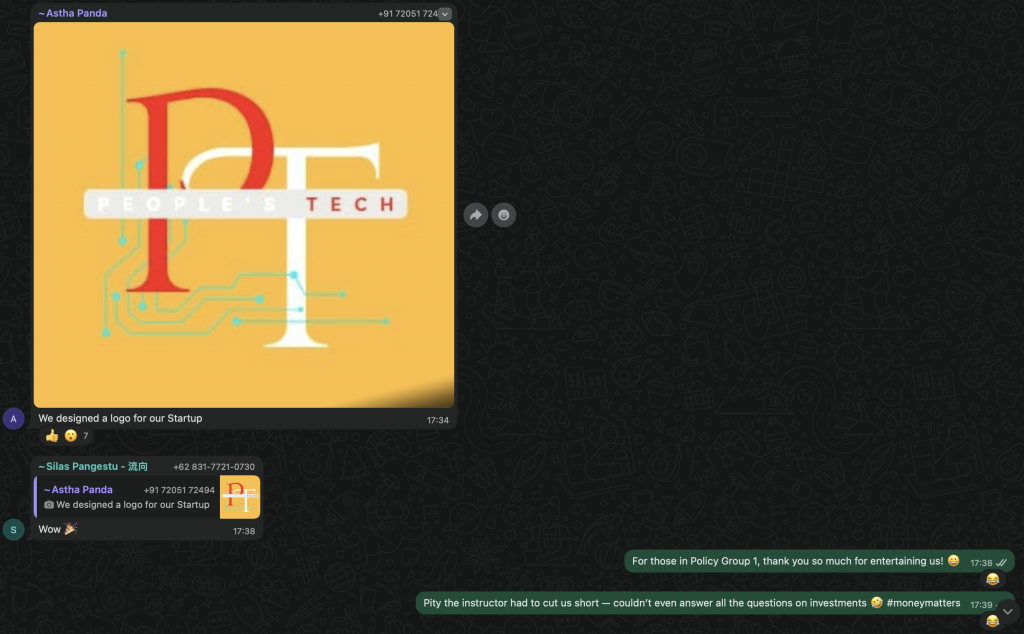
As youth delegates, we were also there to learn, both formally and informally. The most fun policy group in my view was the one on role-playing start-ups, led by Dr Rupa Vasudevan, Chancellor of BEST Innovation University.
But there were also more sombre, introspective groups. The one on “Green Economy and Sustainable Development” led by Jagjeet Sareen was sombre for me. Each person had to contribute an event they experienced, or witnessed, that was attributable to climate change. I mentioned “urban heat effect”. I was also thinking about mentioning other phenomena such as rising food prices over to instability in food prices.
But one person mentioned, “Cyclone Nargis killed my friend.”
At this point, it hit hard. To Singapore, a country naturally insulated from the worst of natural disasters, climate change is about coastal protection and mitigating against the future. It is existential to us, but at a policy level. However, countries that are less blessed have felt increasing intensities and frequencies of extreme weather patterns. For some unfortunate souls, the effects of climate change have been observed to have an increased likelihood of taking lives away. (Those interested in papers can read this on Cyclone Nargis.)
I felt humbled. No argument is more heartfelt than one on lives.
Coverage (shout-out to Keerthigar’s and Alisja’s hard work for getting these up!): https://www.instagram.com/p/DN7O_Vggaoc/
Panels and Speeches
I am no stranger to panels. I have spoken and moderated them before. More often, I have been a listener to panel discussions too, simply by nature of probability. But the panelists this time came from much more illustrious backgrounds. We had sitting MPs and ambassadors grace different panels. The war stories panelists of such backgrounds shared about governance and collaboration were indelible. No pictures for this one; I have no clue how pictures can summarise their words of wisdom.
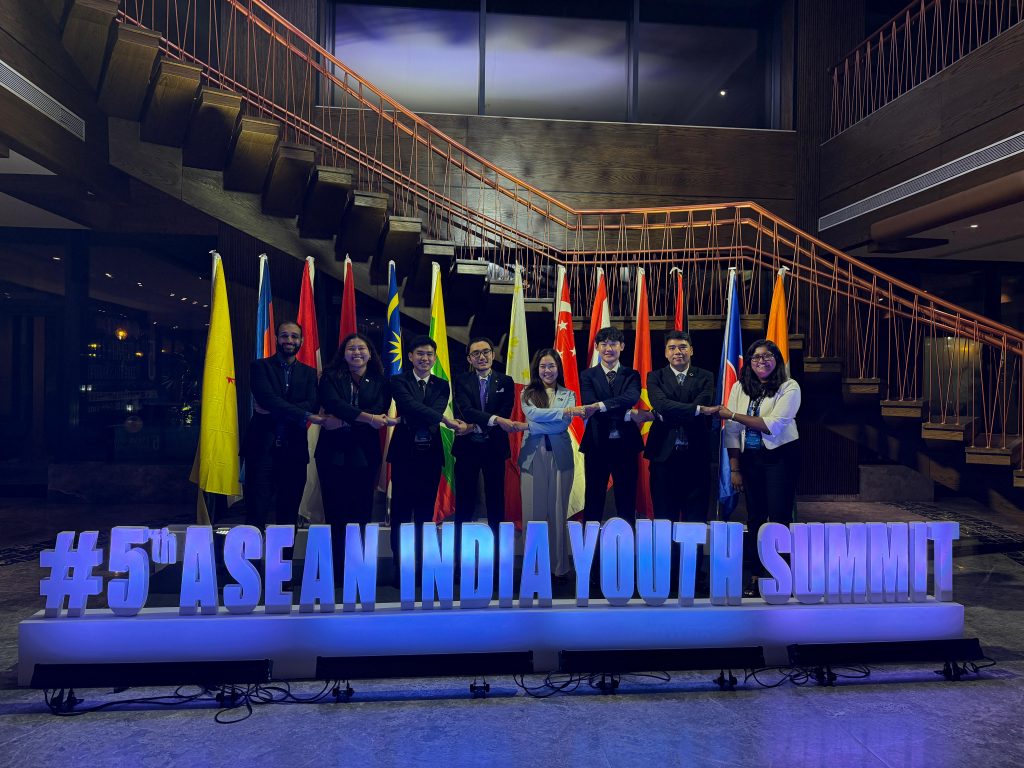
ASEAN Handshake
Of course, we tried. Because we know we can inter-link better than the fractured world today seems to suggest.
National Dresses
“What is Singapore’s national dress? What should we wear?”
Exploration — the Military World
Unlike any other “tour group”, we were lucky enough to visit a naval aviation base by the Indian Navy. No photos of the base, but we can offer this group shot instead.
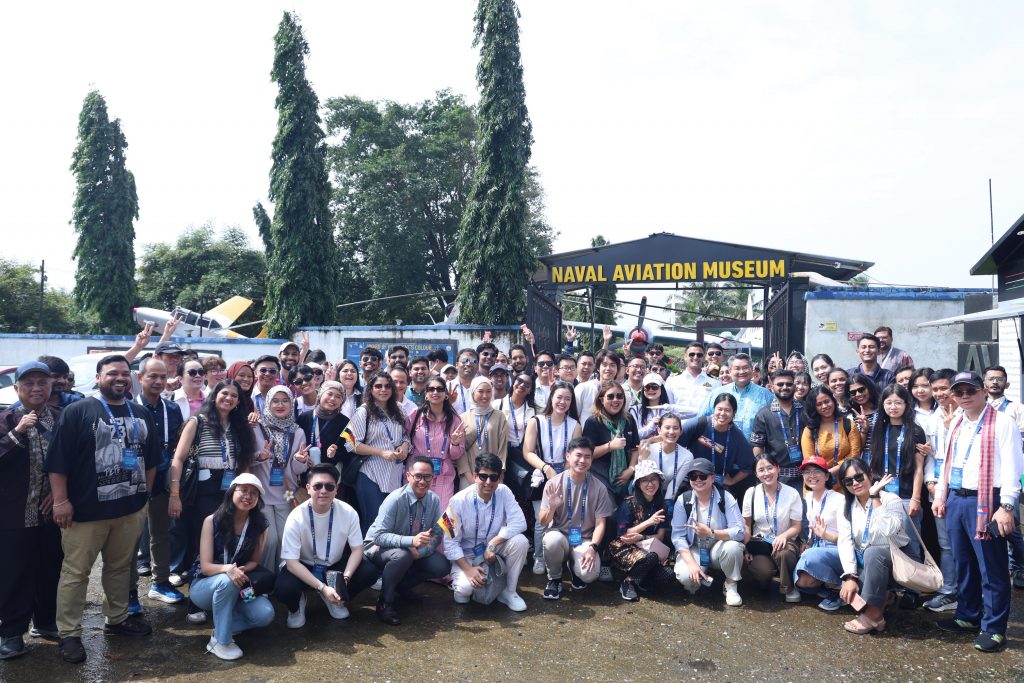
What was perhaps most interesting to me was how India secures seas thousands of kilometres away from land. The answer: an aircraft carrier, which is not something one hears about on a daily basis. Coming close to actual Indian aircraft used for such operations to secure trade routes reminds me of Singapore’s navy — similar concept of operations and thus why we also have bilateral exercises such as SIMBEX 2024.
Exploration — The Civilian World
While the itinerary was tight, there was a chance to explore various parts of Goa, such as the Basilica of Bom Jesus and Fort Aguada. European influences in Goa still remain, resulting in quite a mish-mesh of culture unlike other states of India.
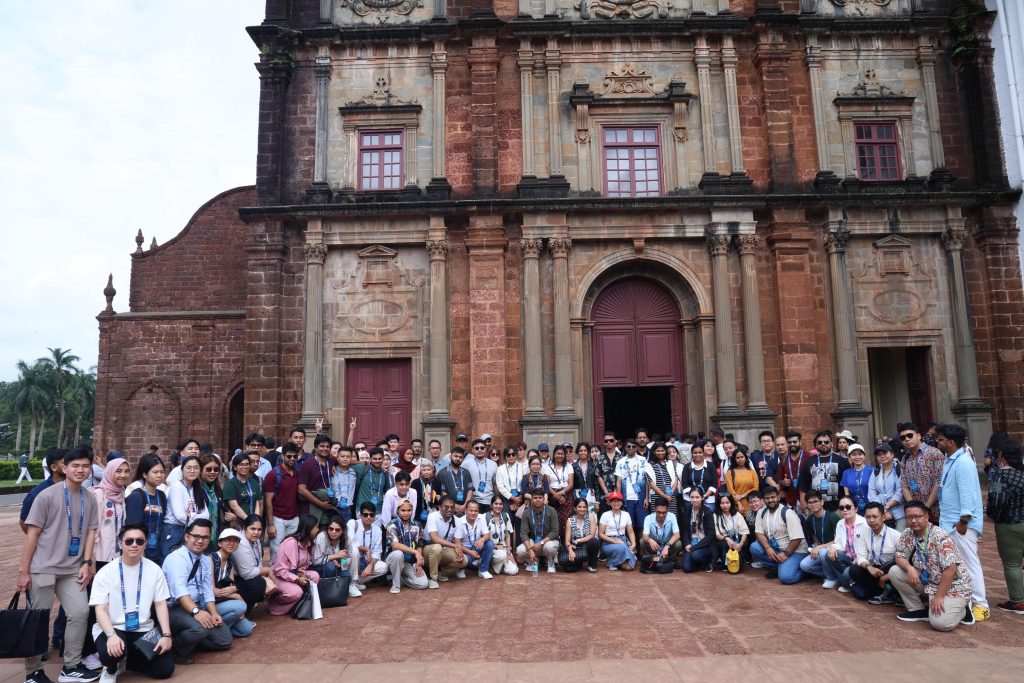
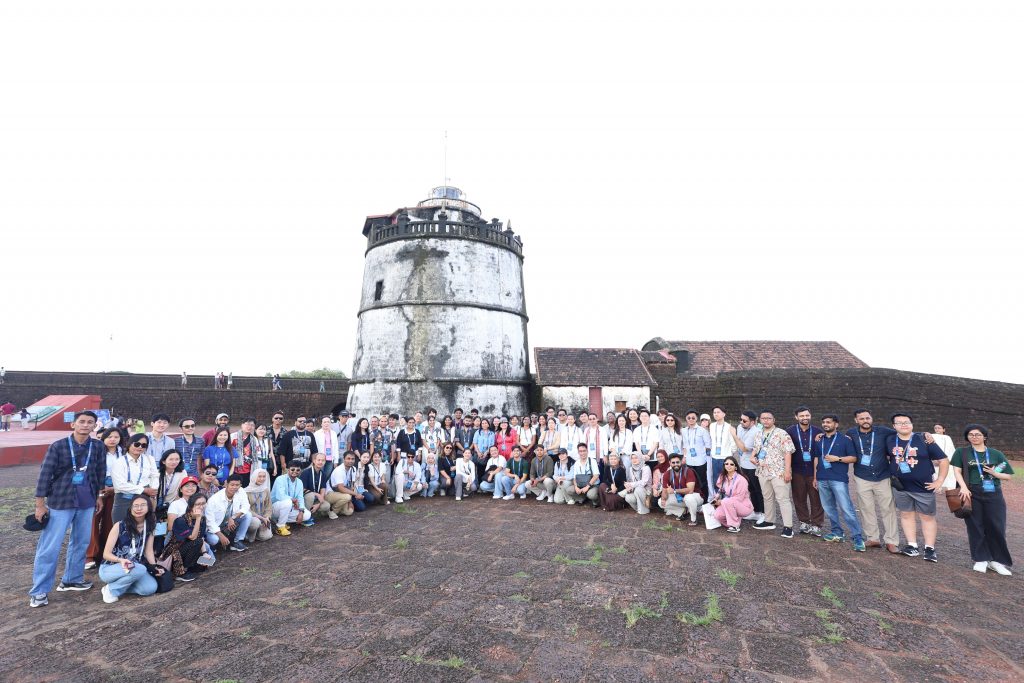
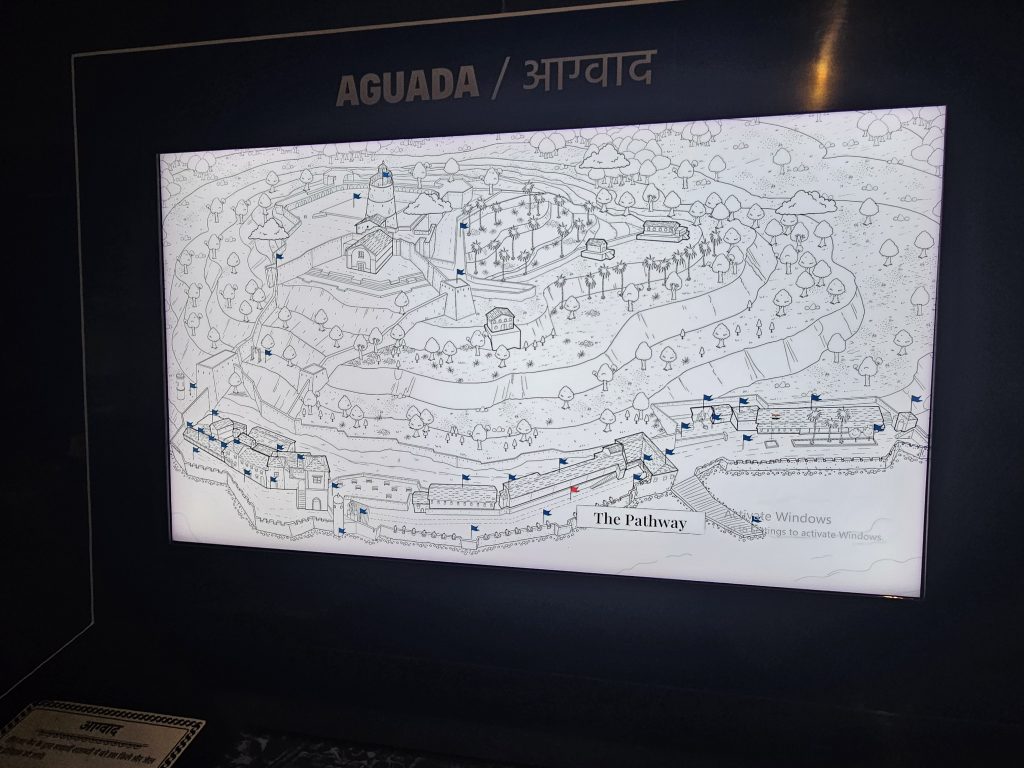
Fort Aguada had a lower section which has a museum. Some museum exhibits.
Parts of the fort allowed for some artistic/perspective shots.
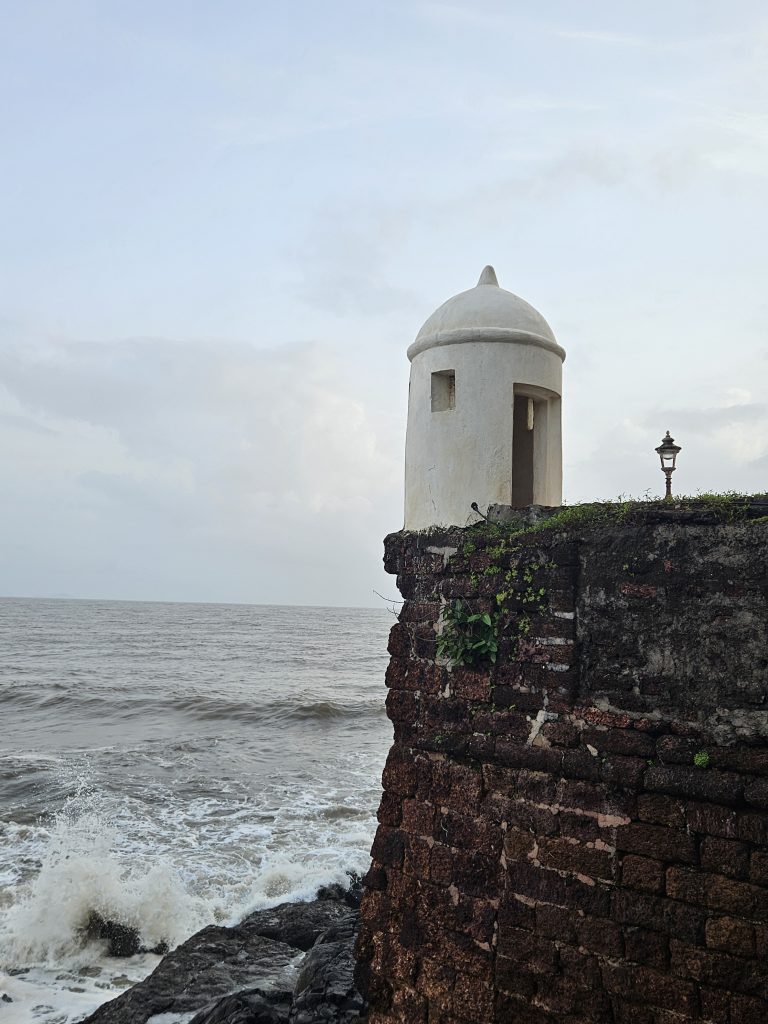
And of course, who can forget… the sea? How about a day view and a night view?
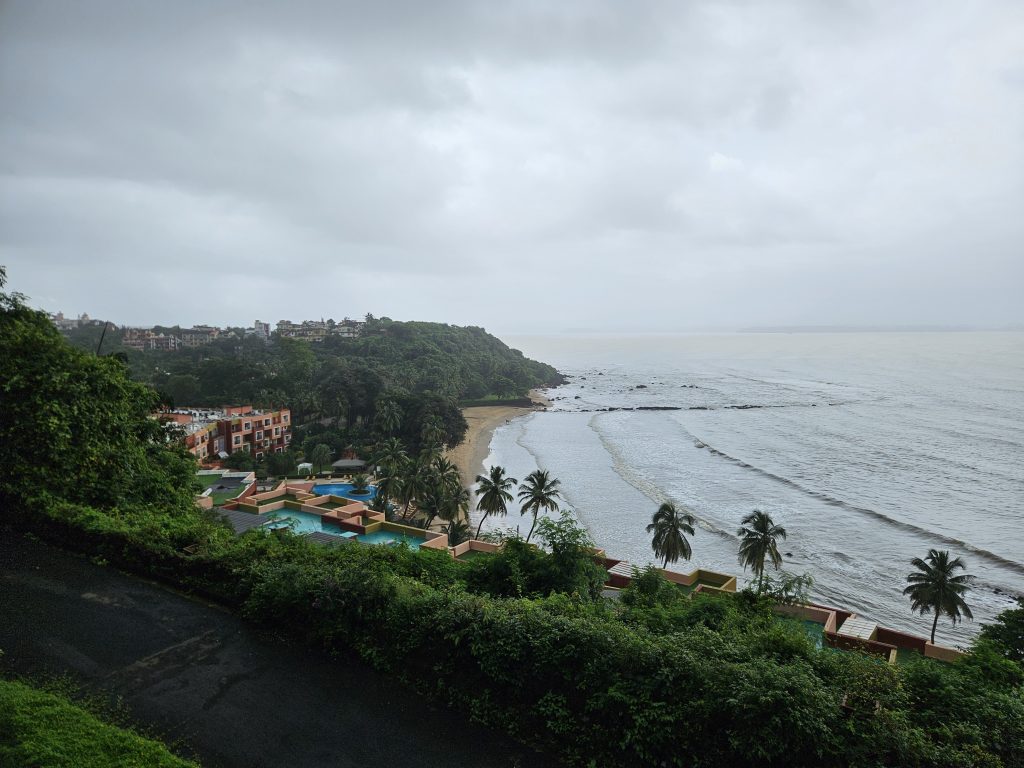
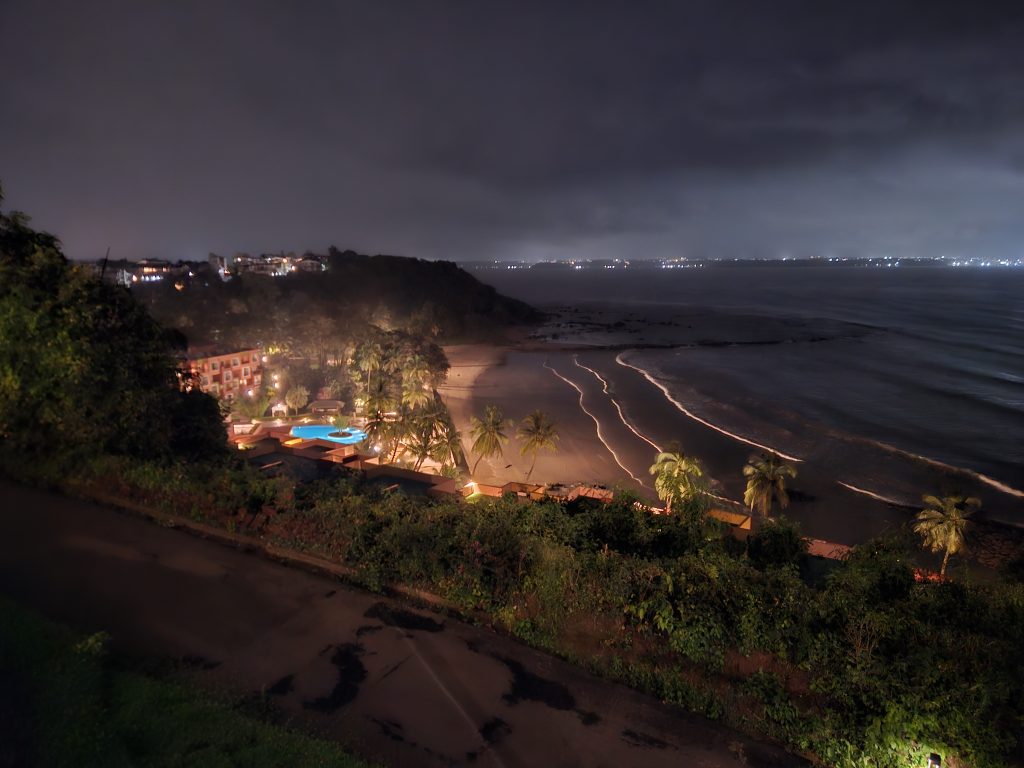
Coverage: https://www.instagram.com/p/DOCvsQDAdgf/
Side Quest: Gotta Catch Dem All!
One of our delegates, Max, sought out to ensure he saw everyone! Did he make it? He did, on the last day, with a few hours to spare!
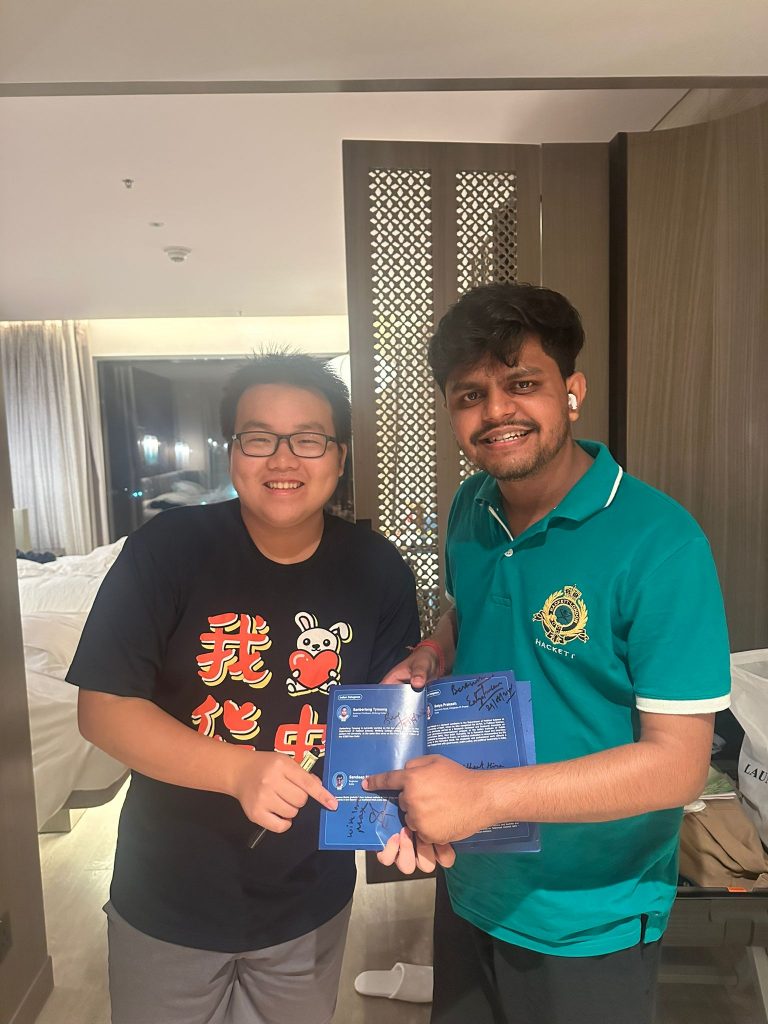
Media?
Behind the scenes, there was also coverage. Hear first-hand from Keerthigar, her coverage on Mediacorp! (https://www.instagram.com/reel/DN7O_Vggaoc/). And also, getting a mention of this sort from our High Commssion is an honour.
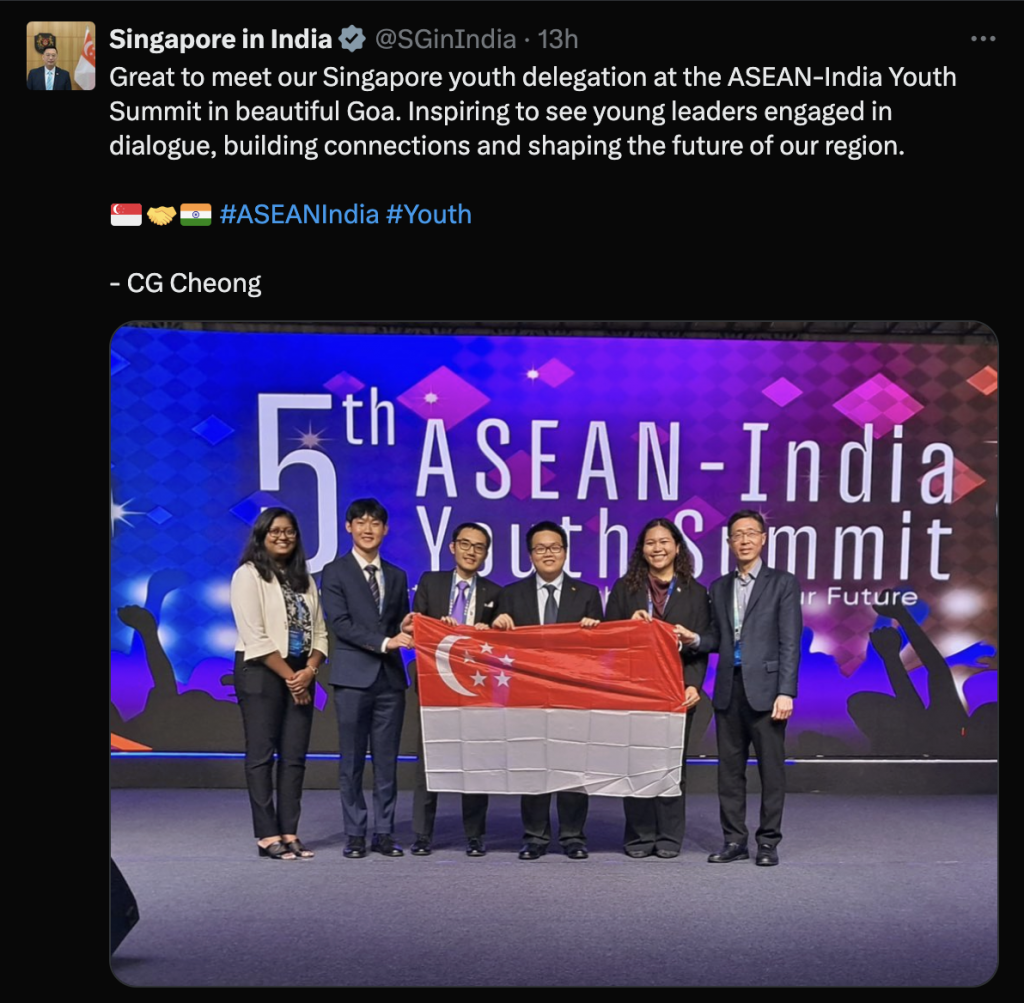
Reflections
Each time I come to India, I marvel at the diversity of people and cultures. Even if I had been to Goa (to give a class) some months back, I felt that this Goa trip was distinctively different from my previous one. This time round, I had the privilege of viewing the military perspective of India, as well as the diplomatic one. But even with the tense geopolitical climate like now, countries will always have some agency to establish ties with other countries. What Singapore has done with India is extensive, and should continue to be, both bilaterally and under the ASEAN framework.